
Flame resistant and flame retardant both describe textiles that resist ignition and self-extinguish once the flame source is removed. In industry practice, flame resistant (FR) is the umbrella term for all such fabrics, while flame retardant usually means the fabric gained this property through a chemical treatment; fabrics whose fibres resist fire by nature are called inherently flame resistant. The difference matters for wash durability, comfort and price — not for whether the garment protects.
FR-treated fabric
flame retardant
Starts as a conventional textile — typically 100% cotton or a cotton-rich blend — and receives a flame retardant finish (for example THPC-based treatment). The finish makes the fabric self-extinguishing and is rated for a defined number of industrial wash cycles: depending on the product line, XM FireLine treated fabrics keep their FR properties for up to 50 or 100 industrial washes. Treated cotton keeps the comfort and breathability of a natural fibre and usually costs less.
Inherently FR fabric
flame resistant by fibre
Resistance to flame is built into the fibre polymer itself — typical examples are modacrylic blends and aramid fabrics. The protection cannot be washed out or worn away, which makes inherent fabrics a common choice where garments face very long service life, aggressive laundering or arc-flash requirements. The trade-offs are a higher price and, for some constructions, a different hand feel than cotton.
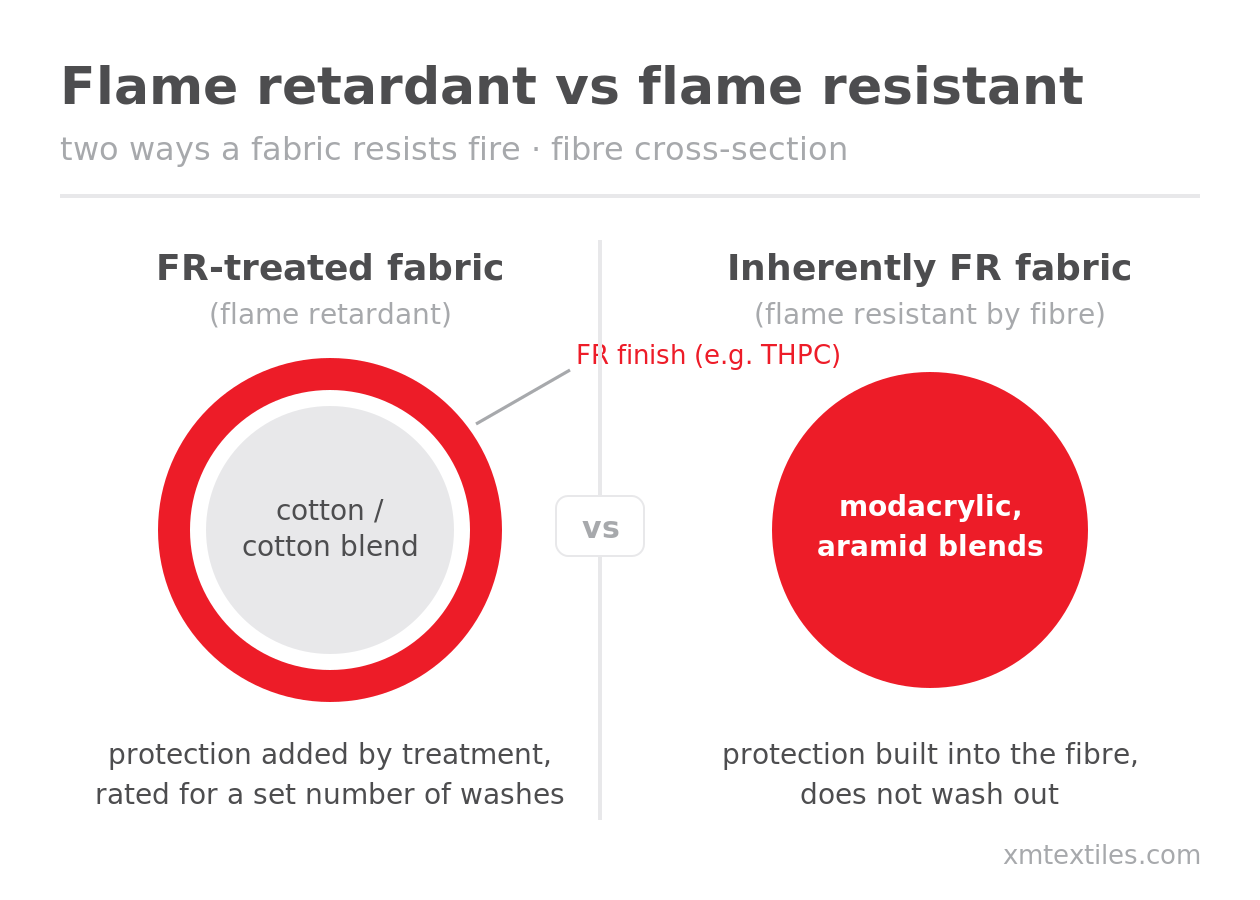
Treated vs inherent: side-by-side
| FR-treated (flame retardant) | Inherently FR (flame resistant) | |
|---|---|---|
| How protection works | Chemical finish applied to the fabric | Property of the fibre itself |
| Durability of protection | Rated number of washes (e.g. 50–100 industrial cycles) | For the life of the garment |
| Typical fibres | Cotton, cotton/nylon, cotton/polyester | Modacrylic blends, aramids |
| Comfort | Natural cotton feel, breathable | Good; often lighter for the same protection |
| Price | Lower | Higher |
| Typical use | Welding, industry, oil & gas workwear | Long-life garments, arc flash, multi-hazard |
Which should you choose?
Both types can be certified to the same garment standards — EN ISO 11612, EN ISO 11611 for welding, or NFPA 2112 in the US (see our comparison of EN ISO 11612 vs NFPA 2112). The practical questions are the garment service life and laundering regime: if garments are replaced within the rated wash count, treated cotton is usually the most cost-effective choice; if they must survive years of industrial laundering or protect against electric arc, inherent fabrics earn their premium. The rated wash count and certificates for every XM FireLine fabric are stated in its TDS.
FAQ
Is FR clothing fireproof?
No. FR fabrics are self-extinguishing — they stop burning once the flame source is removed — but no workwear fabric is fireproof.
Does the FR treatment wash out?
The treatment is rated for a defined number of wash cycles (for XM FireLine treated fabrics, up to 50 or 100 industrial washes depending on the line). Follow the washing instructions in the TDS; the protection lasts for the rated count.
Is inherent FR always better?
No. Inherent fabrics keep protection for life but cost more; treated cotton offers natural comfort at a lower price and protects reliably within its rated wash count.
Which standards apply to FR fabrics?
Garments are certified to EN ISO 11612 (heat and flame), EN ISO 11611 (welding) and, in North America, NFPA 2112 (flash fire).
Looking for FR fabrics?
Treated cotton lines and inherently flame resistant fabrics, stocked in three European warehouses.