
EN ISO 11612 and NFPA 2112 are the two main standards for flame-resistant workwear: EN ISO 11612 is the international/European standard covering protection against heat and flame in six hazard categories, while NFPA 2112 applies in the United States and focuses on protection against flash fire. A garment certified to one standard is not automatically compliant with the other — the test methods, requirements and certification procedures differ.
What is EN ISO 11612?
EN ISO 11612 (Protective clothing — Clothing to protect against heat and flame) is the ISO standard used across Europe and most international markets. Instead of a single pass/fail scenario, it grades protection by hazard type using code letters:
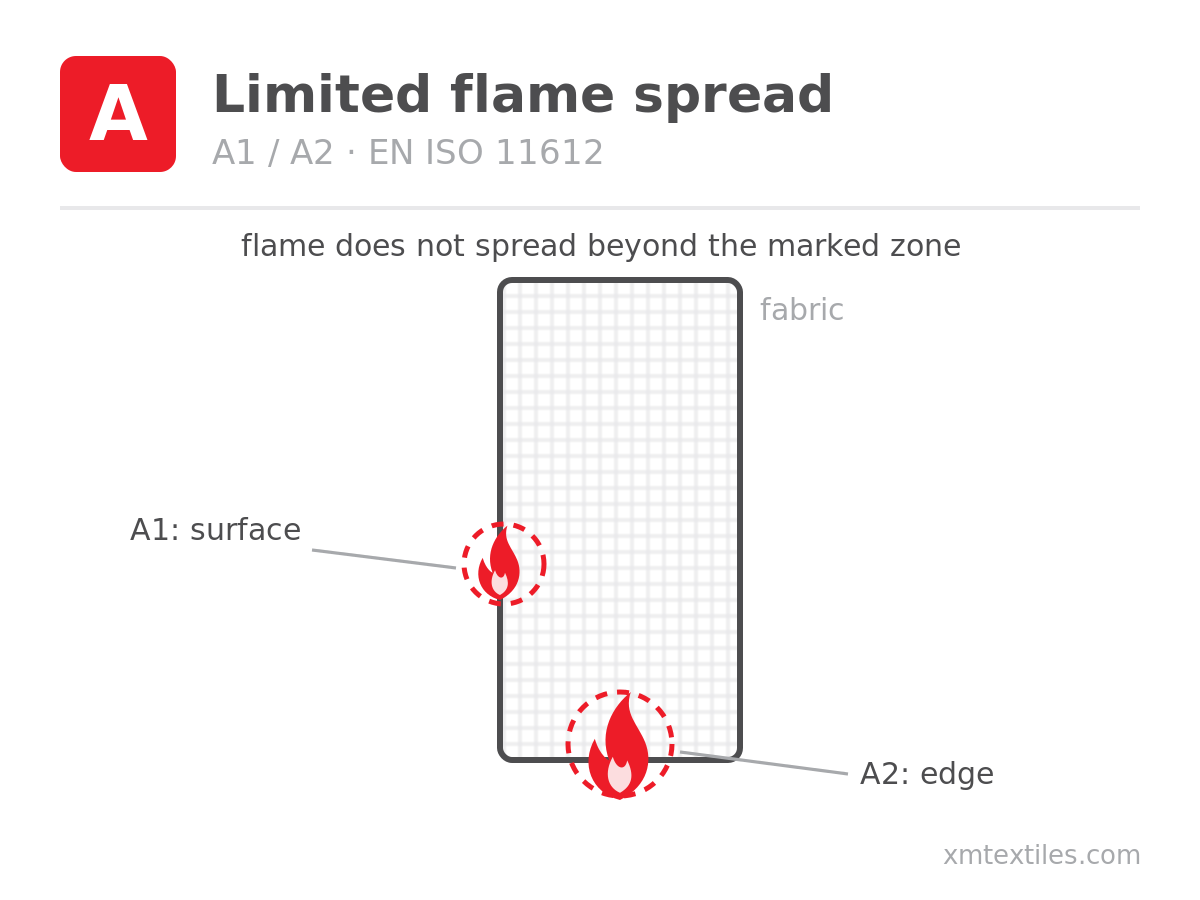
A1/A2 — limited flame spread
The flame is applied to the fabric surface (A1) or edge (A2) and must not spread beyond the exposure zone.
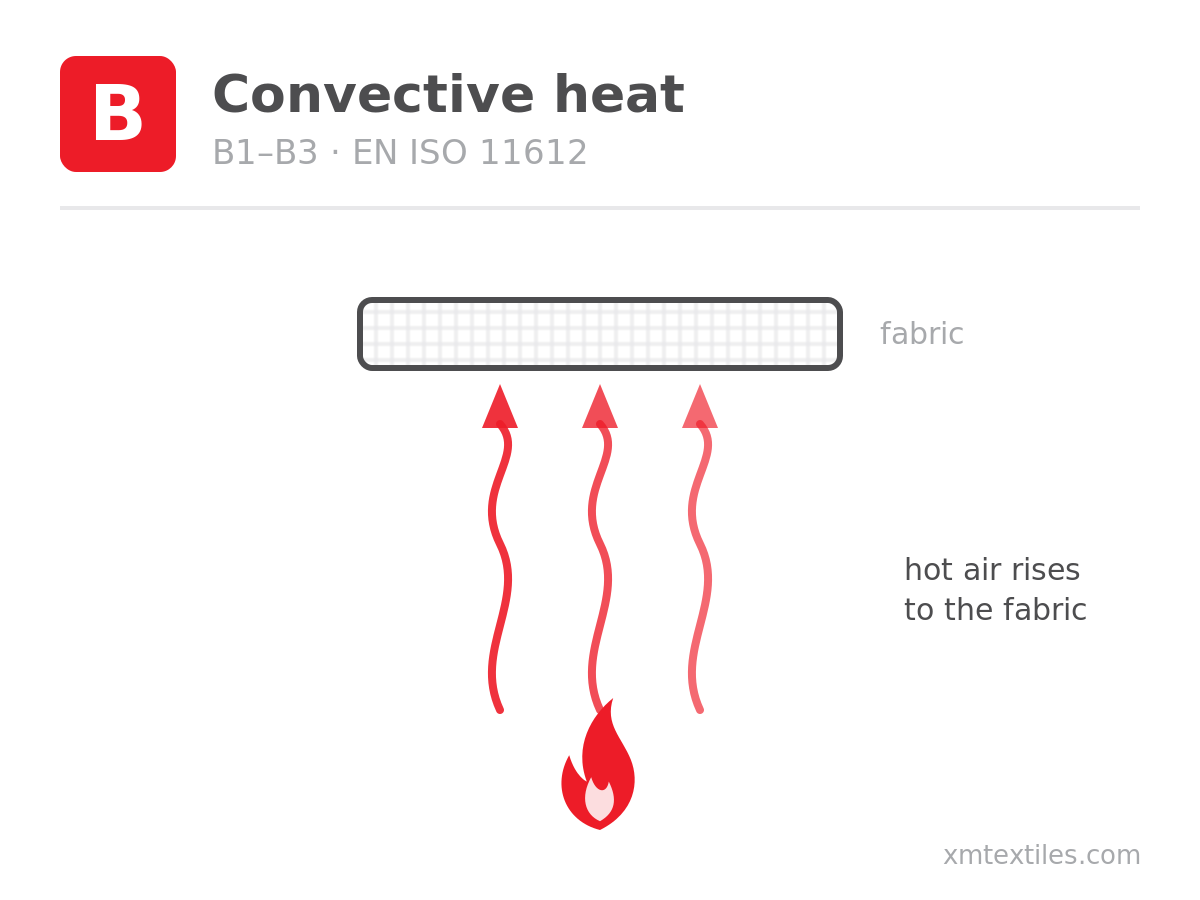
B1–B3 — convective heat
Protection against hot air and combustion gases rising from a flame to the fabric.
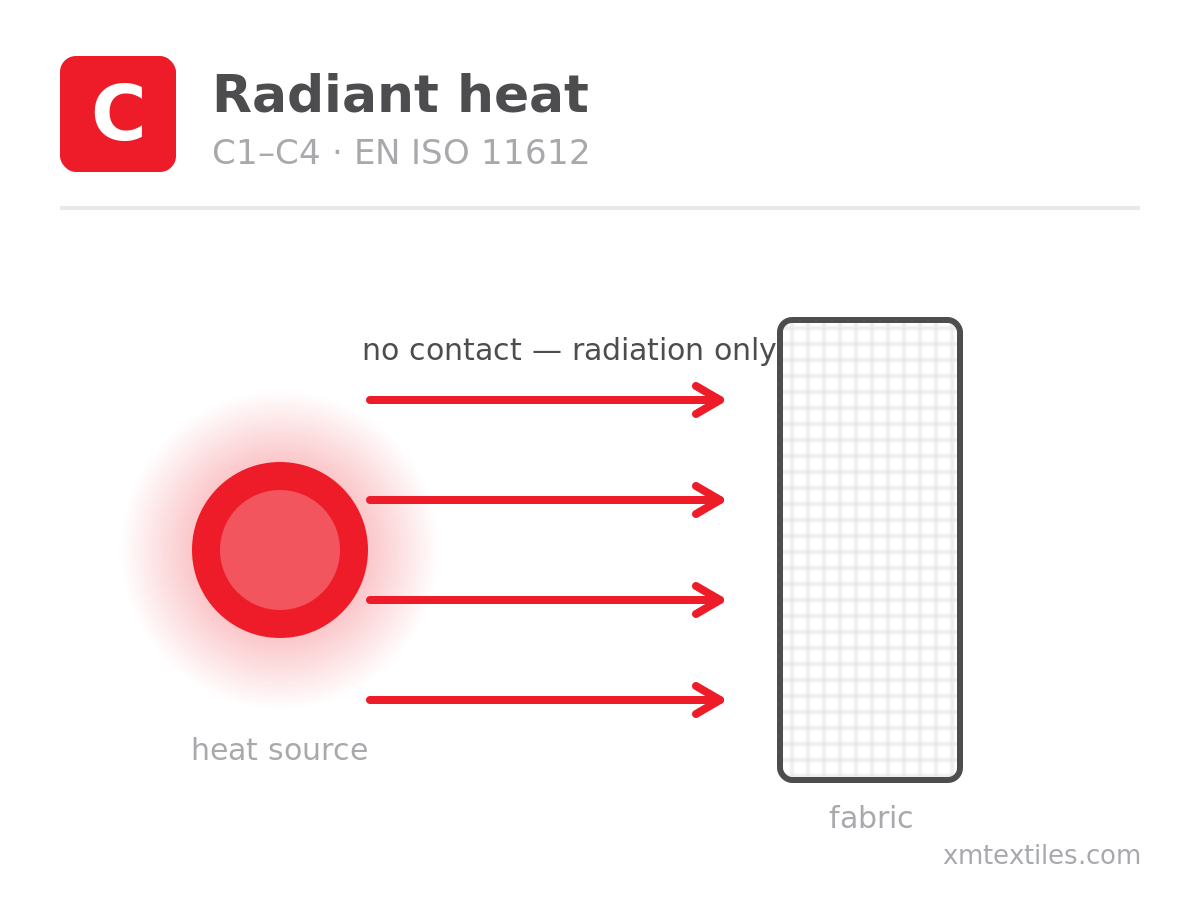
C1–C4 — radiant heat
Protection against thermal radiation from a heat source without direct contact.
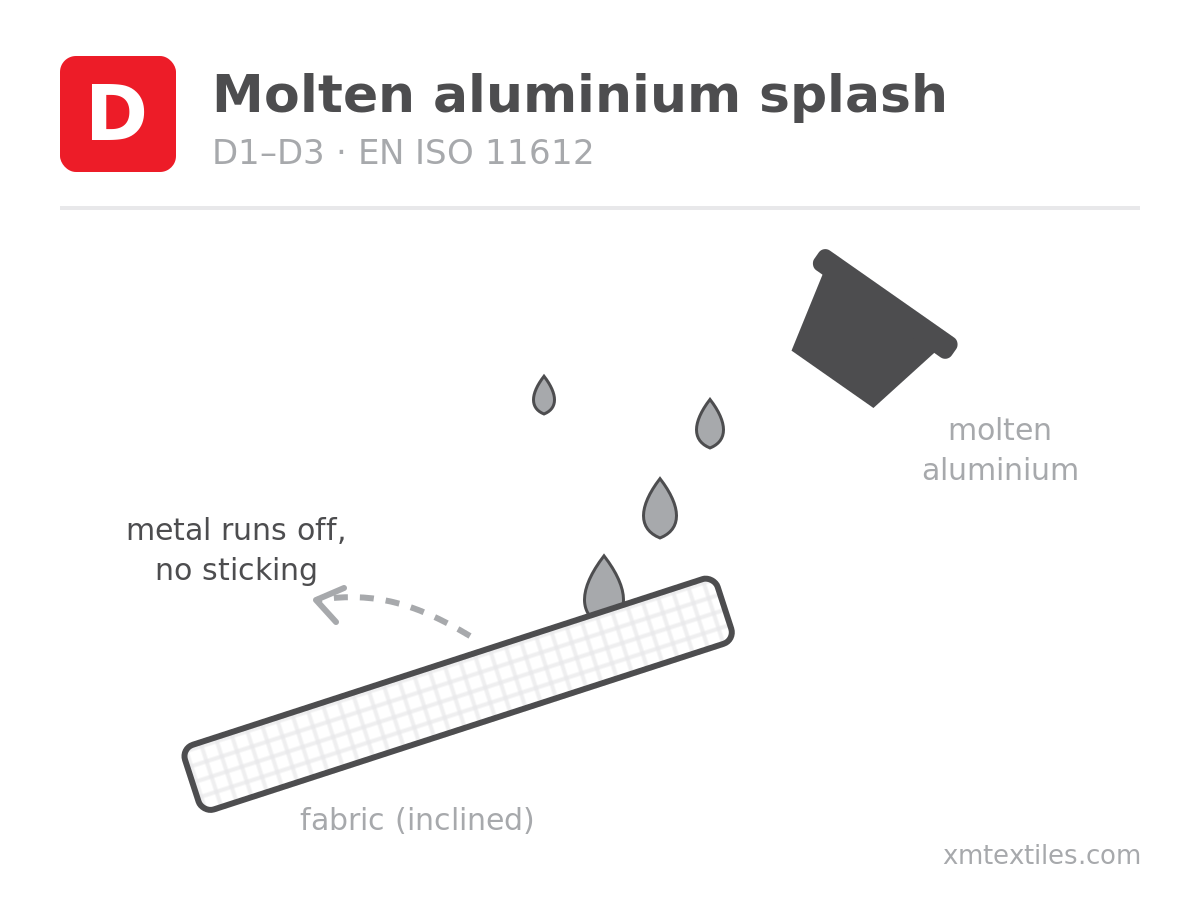
D1–D3 — molten aluminium splash
Droplets of molten aluminium must run off the fabric without sticking or burning through.
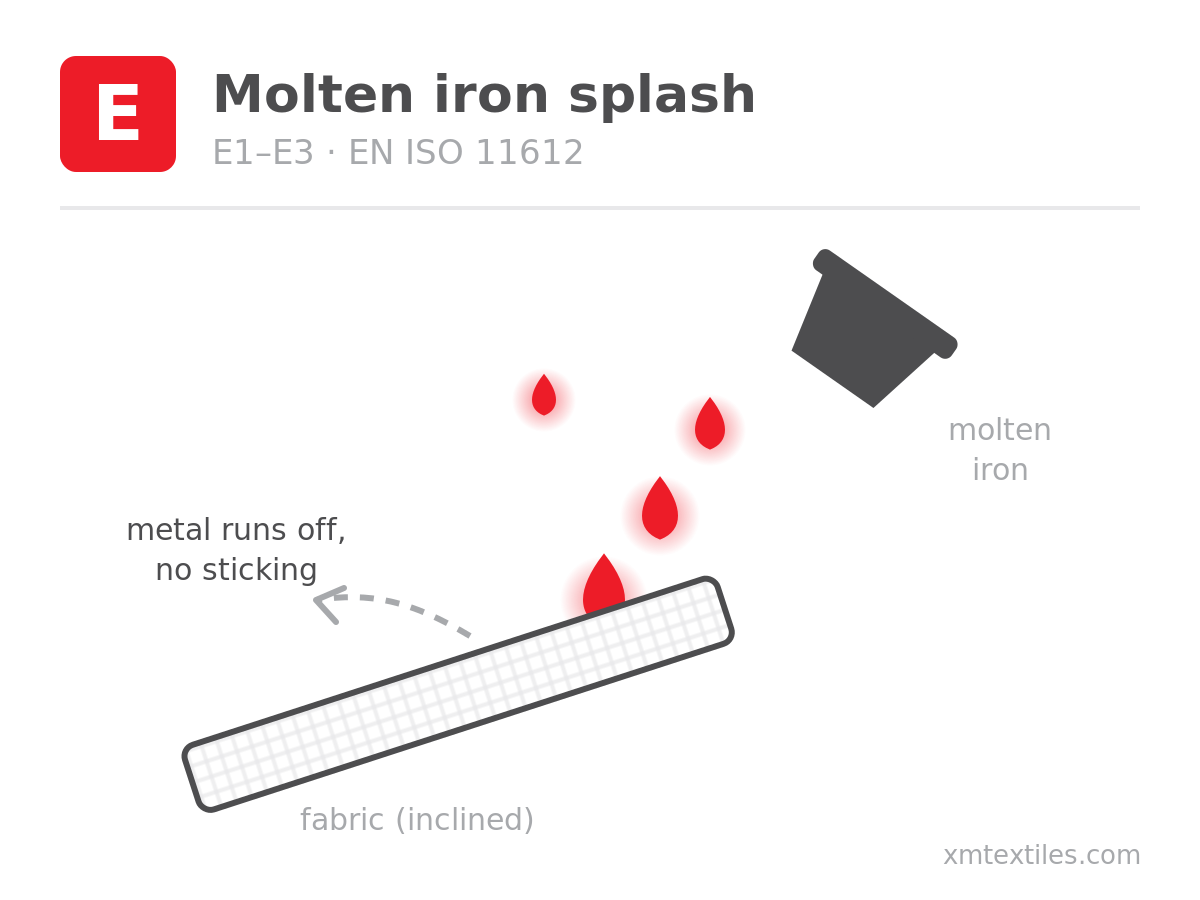
E1–E3 — molten iron splash
The same principle for molten iron.
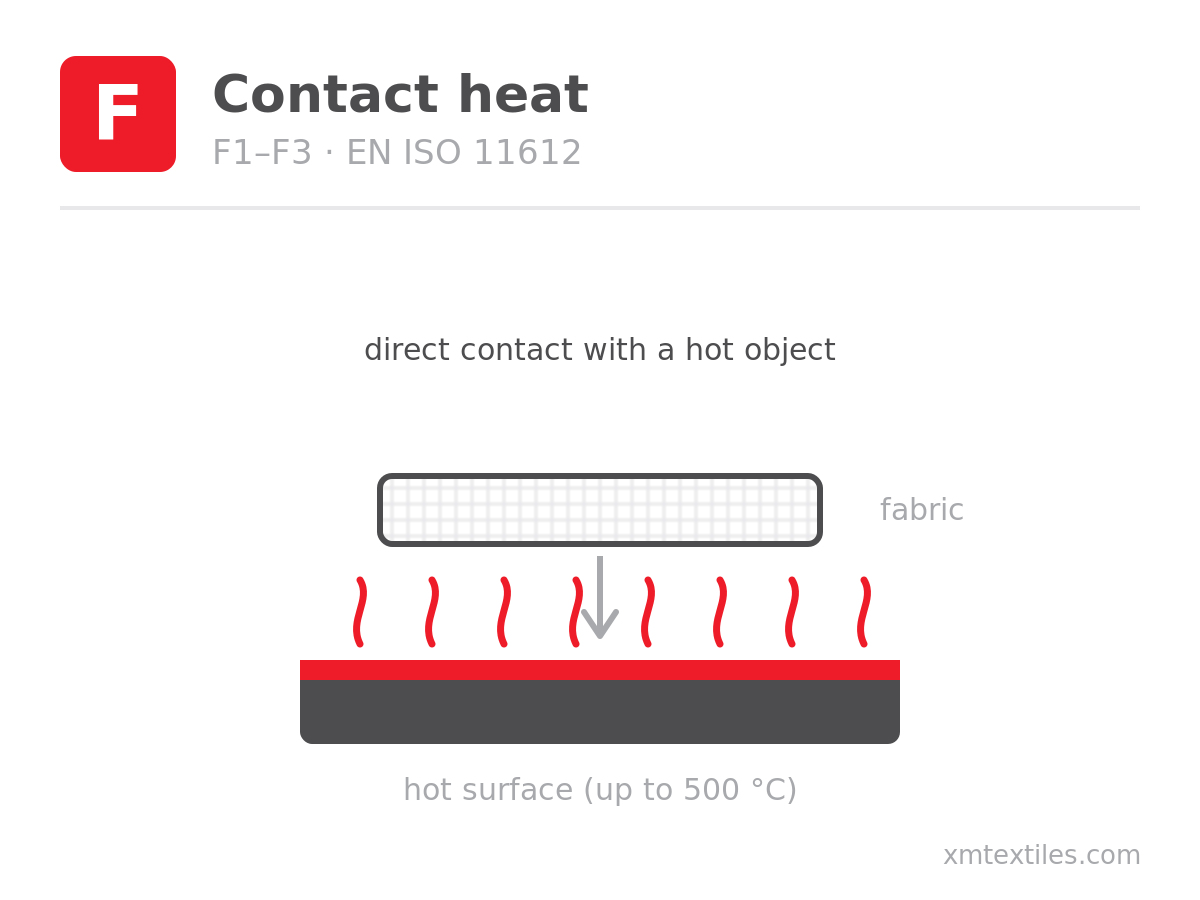
F1–F3 — contact heat
Protection during direct contact with a hot object or surface.
A garment is marked, for example, «A1 B1 C1» — the buyer selects the letters and levels matching the workplace risk assessment. In the EU the garment must also pass EU type-examination (CE marking under PPE Regulation 2016/425).
What is NFPA 2112?
NFPA 2112 (Standard on Flame-Resistant Clothing for Protection of Industrial Personnel Against Short-Duration Thermal Exposures from Fire) is published by the National Fire Protection Association in the USA. It defines minimum requirements for FR garments protecting workers from flash fire — a sudden, short (about 3 seconds) fire event typical for oil, gas and petrochemical sites.
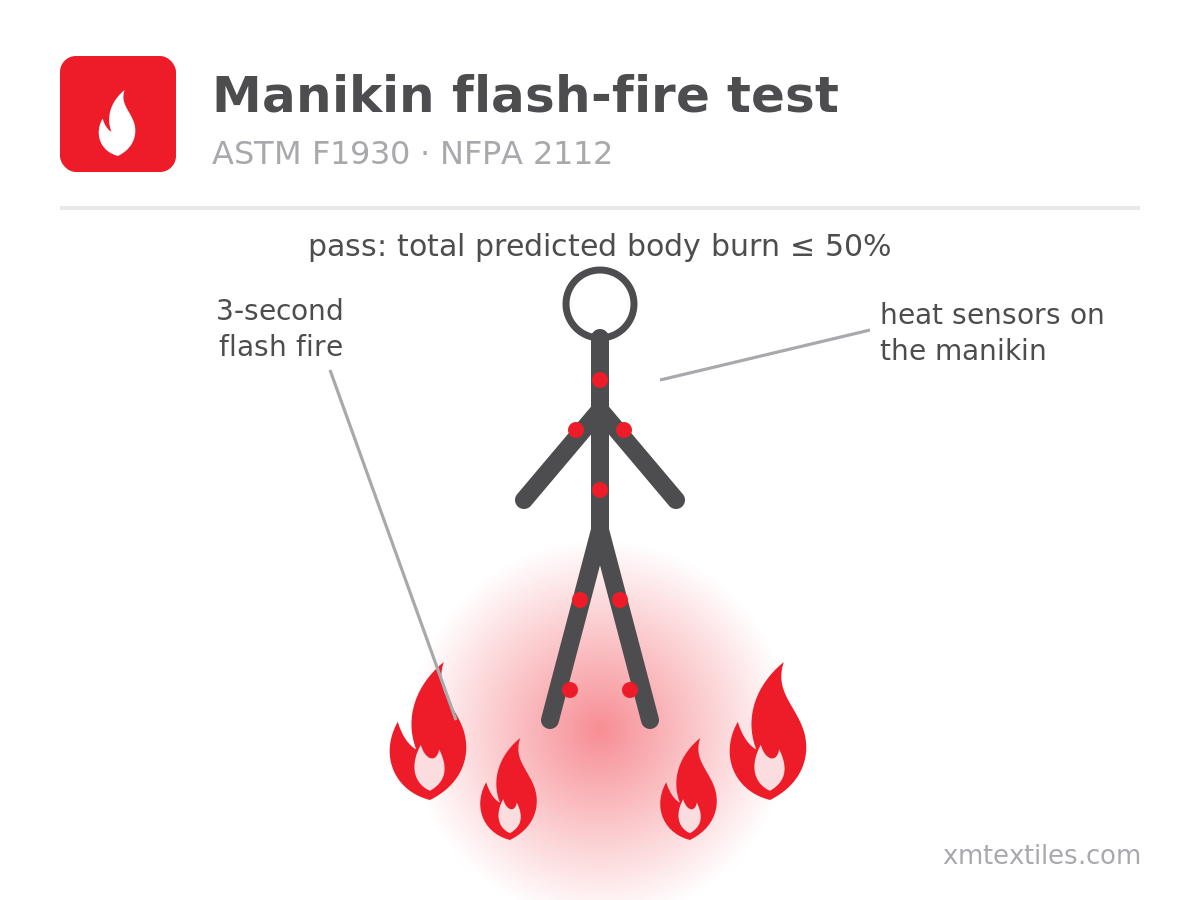
Manikin flash-fire test (ASTM F1930)
A full garment is exposed to a 3-second simulated flash fire on an instrumented manikin; total predicted body burn must not exceed 50%.
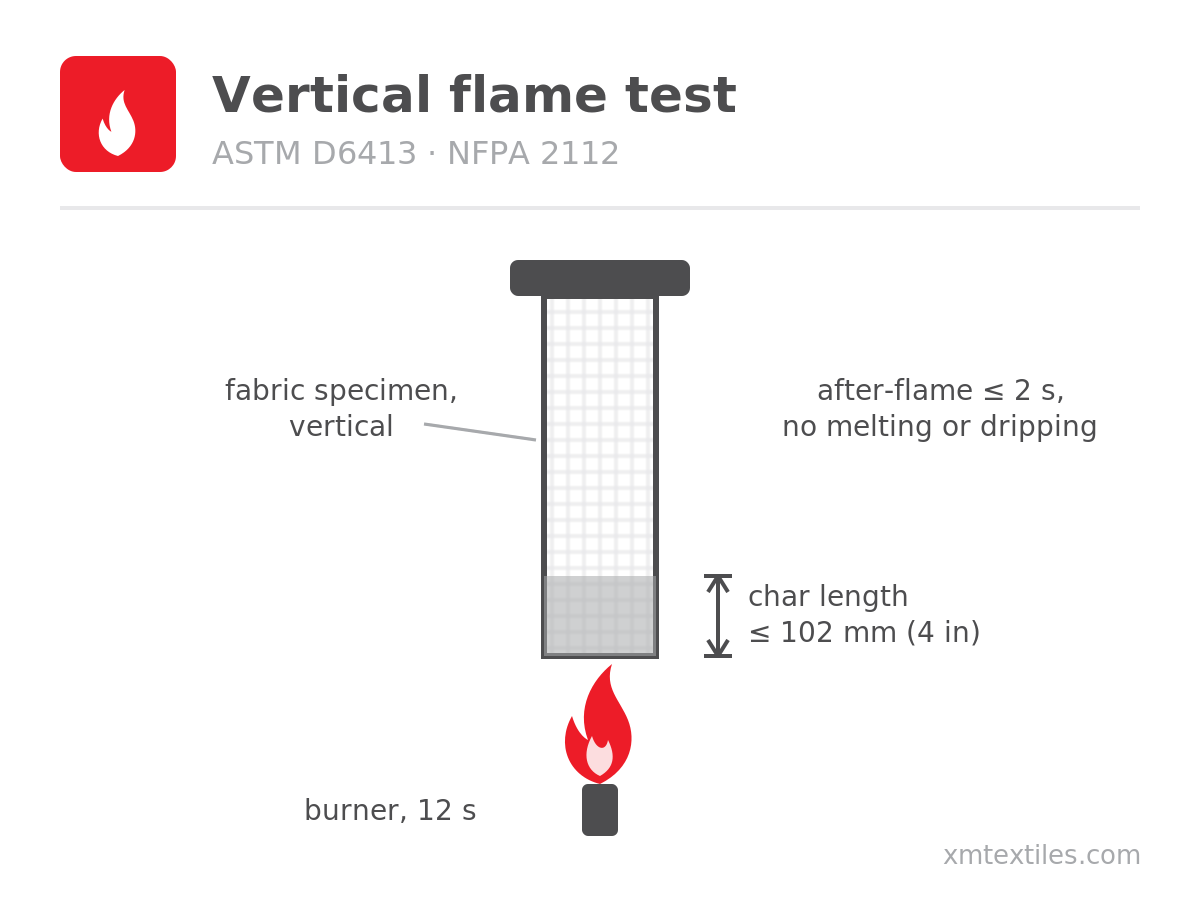
Vertical flame test (ASTM D6413)
A vertical fabric specimen is exposed to a burner flame for 12 seconds: char length must not exceed 102 mm (4 in), after-flame 2 seconds, with no melting or dripping. Heat and thermal shrinkage resistance and melting behaviour of components are tested separately.
- Certification by an accredited third party (e.g. UL); garments carry the NFPA 2112 label.
- Commonly required by US and Canadian oil & gas operators (often together with NFPA 70E for arc flash, which is a separate standard).
Side-by-side comparison
| EN ISO 11612 | NFPA 2112 | |
|---|---|---|
| Region | EU and international | USA, Canada, US-driven projects |
| Hazard model | Heat and flame, 6 hazard groups (A–F) | Flash fire (single scenario) |
| Headline test | Letter-coded tests per hazard; performance levels | 3-second manikin burn test, ≤50% predicted body burn |
| Marking | Pictogram + code letters (e.g. A1 B1 C1) | NFPA 2112 label |
| Legal frame | CE marking, PPE Regulation 2016/425 | Industry/contract requirement |
| Typical industries | Welding, industry, energy, oil & gas | Oil & gas, petrochemical |
Can one fabric meet both?
Yes. Many FR fabrics are engineered and tested to support garment certification under both systems — this matters for manufacturers exporting to both markets. Whether a specific fabric supports EN ISO 11612 and/or NFPA 2112 garment certification is stated in its technical data sheet (TDS) and test reports. Several XM FireLine fabrics and XM SilverLine FR reflective tapes are tested for both EN and NFPA requirements — check the certificates section of each product page or request the TDS.
FAQ
Is NFPA 2112 stricter than EN ISO 11612?
Neither is universally stricter — they measure different things. EN ISO 11612 covers a wider range of hazards with graded levels; NFPA 2112 has one demanding pass/fail scenario (flash fire).
Do I need NFPA 2112 in Europe?
Usually not; EU law requires CE marking under the PPE Regulation, for which EN ISO 11612 is the relevant standard. NFPA 2112 appears in Europe mainly on projects run by US oil & gas operators.
Is EN ISO 11612 the same as EN 531?
EN ISO 11612 replaced the older EN 531. References to EN 531 in old specifications should be read as EN ISO 11612.
What about arc flash?
Electric arc protection is covered by separate standards: IEC/EN 61482 in Europe and NFPA 70E/ASTM F1959 in the USA.
Need a fabric certified to EN ISO 11612 — or to both systems?
XM FireLine flame retardant fabrics are stocked in three European warehouses and ship by the roll.